AI Agents at Work, Explained Simply: Google’s Gemini Agent and Claude Haiku 5.5
By the Airtics Education team. Last updated 10 October 2026.
In short: Until now, most of us used AI like a very smart search box: ask a question, get an answer. This month Google and Anthropic both launched tools built to do tasks instead. Google’s Gemini agent takes a goal and comes back with finished work, and Anthropic’s Claude Haiku 5.5 is designed to be a fast “team member” for other AI. Here is what that means for your job, how to practise the key skill today, and what to learn next.
Think about how you hand work to a new colleague. You do not tell them every click. You say: “Please put together the onboarding pack for the three people joining on Sunday.” Then you check what they bring back. That, in one sentence, is what the new AI agents are trying to do.
First, what is an AI agent?
A chatbot answers questions. An agent gets things done. Ask a chatbot “What should go in an onboarding pack?” and it gives you a list. Ask an agent to “prepare the onboarding pack” and it can plan the steps, open the right files, draft the documents and come back to you with the result.
Google put it simply when it launched its agent: “You give it objectives, not instructions.” If you want the longer version, our guide What is agentic AI? walks through how agents plan, act and check their work.
Google’s Gemini agent, in plain words
On 8 October 2026 Google announced the Gemini agent, which it calls a “single, universal agent for work” (Google Cloud blog). From one box, it can answer questions, handle knowledge work, create images and write and run code.
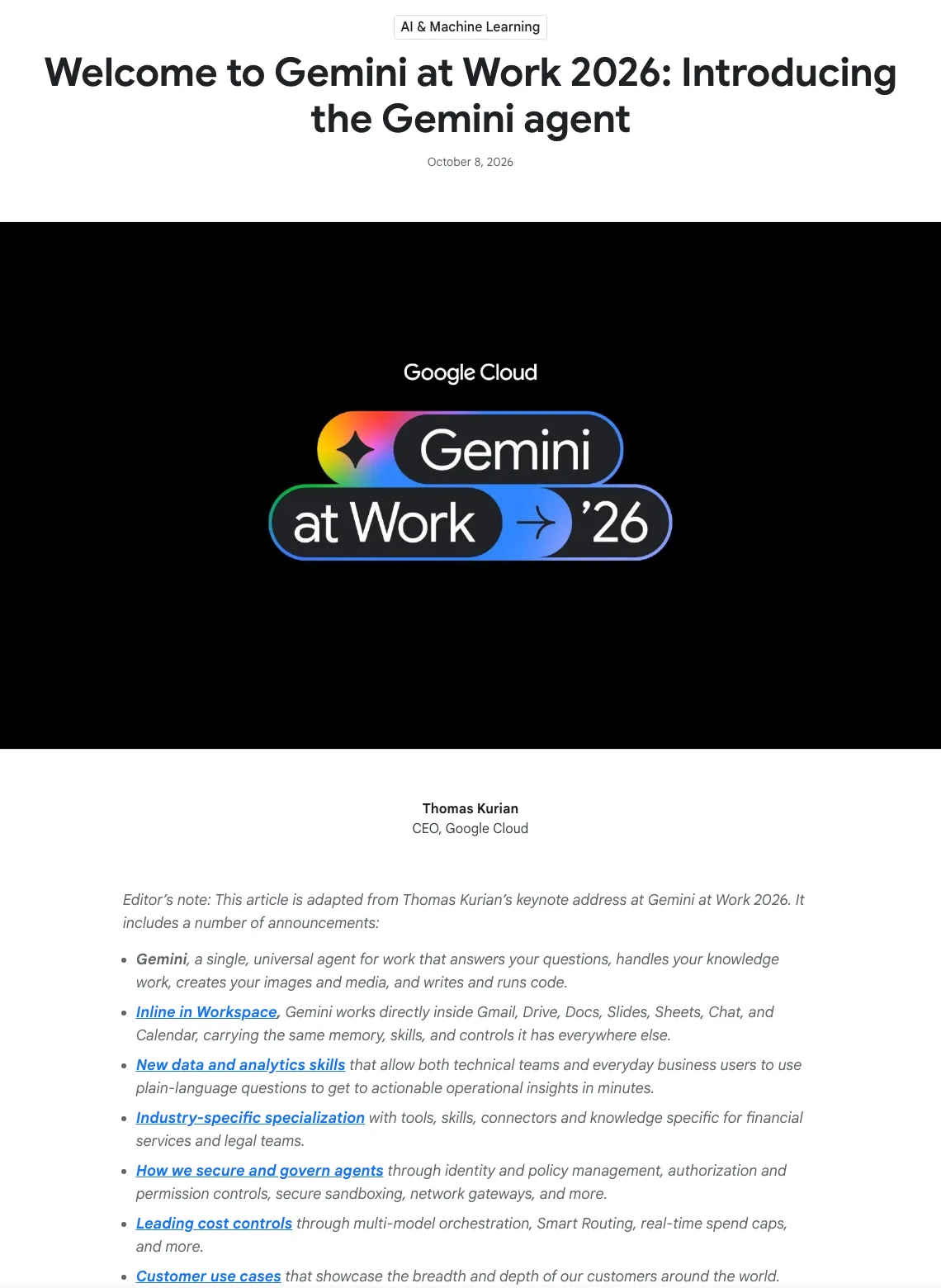
What it can do, according to Google:
- Take a goal and plan the work itself, then return finished work.
- Keep working after you log off. Long jobs carry on in the cloud even when your laptop is closed.
- Work where you already work: Gmail, Docs, Sheets and the rest of Google Workspace, and also Microsoft 365 and Slack.
- Have its own work identity. A “coworker agent” can get its own company email address and only sees what you share with it. Google says each agent is managed “like an employee”, with limited access and a record of everything it does.
- Build its own small team. It can create “sub-agents”, each handling part of the job.
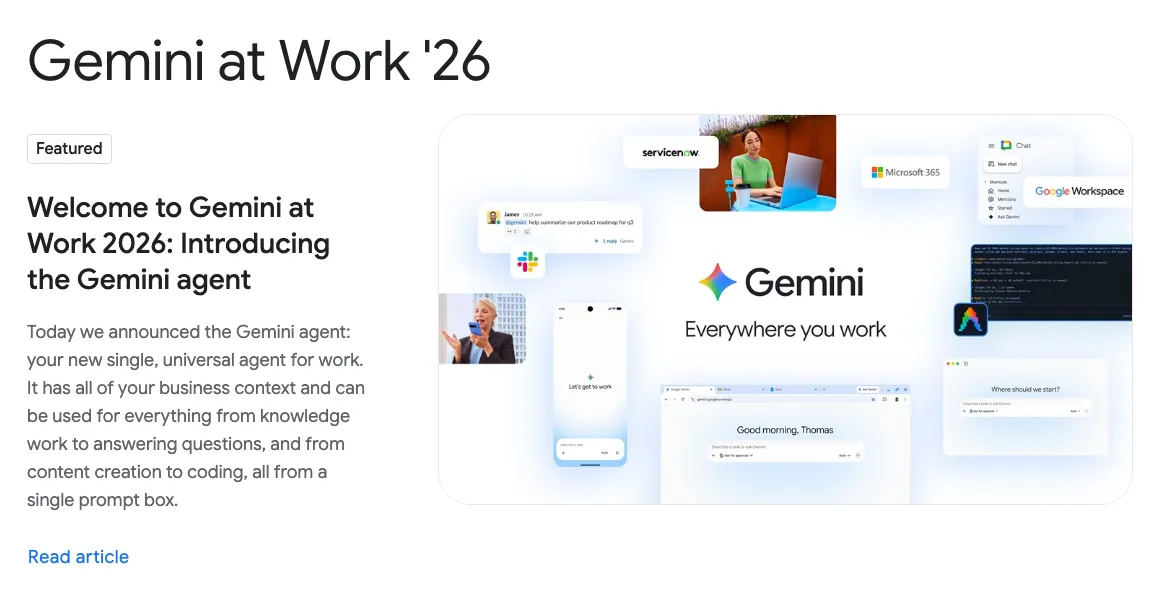
Who can use it? It is a product for businesses, through Google’s Gemini Enterprise. Google has not given a date for wider availability, so if your company uses Google Workspace, your IT team is the one to ask.
There is a regional example too. Google says Qatar University is rolling out Gemini Enterprise across its campus, and that staff there have built more than 2,000 custom agents.
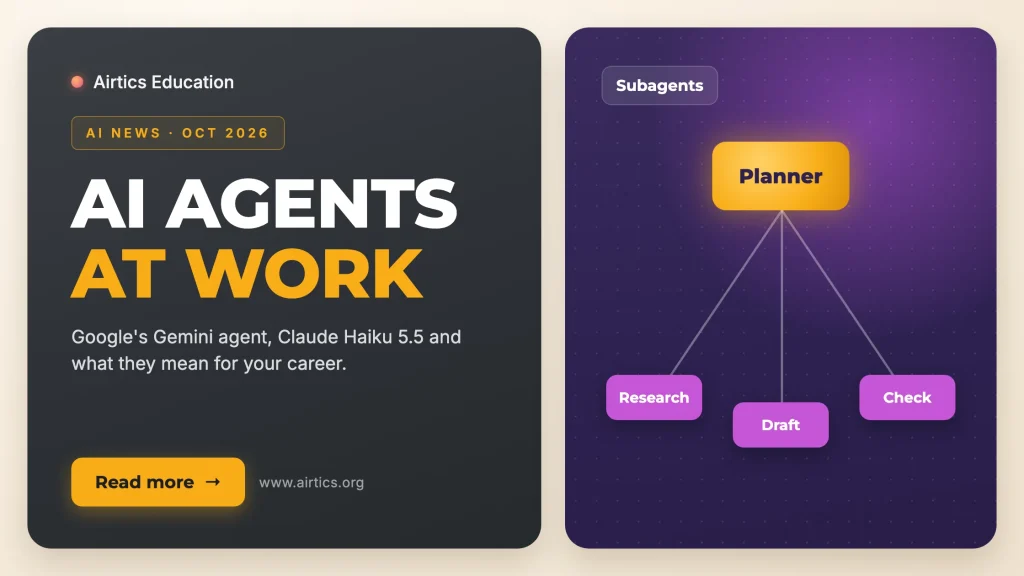
Subagents, explained with a simple picture
Picture a manager with a small team. The manager understands the goal and splits it into pieces: one person gathers the numbers, another drafts the summary, a third checks the format. The manager then puts it all together.
AI is starting to work the same way. A bigger, more capable AI acts as the manager. Smaller, faster AIs, called subagents, do the individual pieces at the same time.
That is the job Anthropic designed Claude Haiku 5.5 for. Released on 7 October 2026, it is what Anthropic calls its fastest model so far, built for high-volume tasks such as summaries, sorting and live customer support (Anthropic announcement). Anthropic says it “pairs well” with its larger models as a subagent: the larger model plans, and Haiku handles the well-defined pieces.
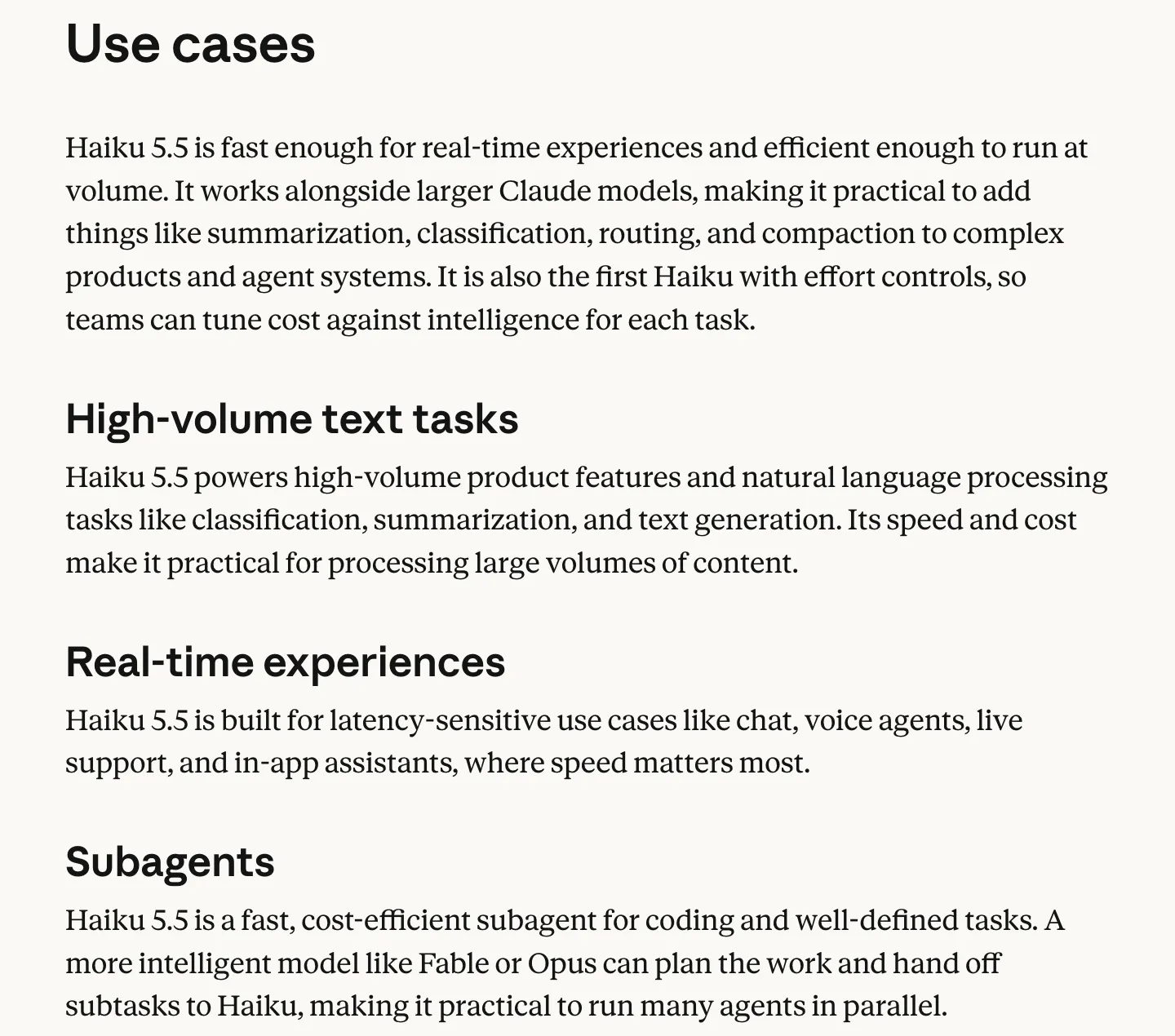
It is also the first Haiku model with an “effort” setting, a bit like asking someone for a quick draft or a careful version.
Try it yourself: two practical exercises
Exercise 1: let AI sort your feedback (10 minutes)
Sorting and summarising is exactly the kind of task Haiku 5.5 was built for. Anthropic says it is available on the Free plan as well as paid plans.
- Go to claude.ai and sign in.
- Choose Haiku 5.5 in the model menu.
- Paste 15 to 20 short comments, for example from a customer survey or an internal feedback form. Remove names first.
- Ask: “Sort these comments into 4 or 5 themes. For each theme, give a one-line summary, how many comments belong to it and one example.”
- Compare the result with what you would have done by hand. What did it get right? What did it miss?
Exercise 2: write your first “objective” (15 minutes)
Agents work from goals, so the skill that matters most is writing a clear one. Use this simple template with any AI assistant, or with a colleague:
| Part | What to write | Example (HR onboarding) |
|---|---|---|
| Goal | What you want done, in one sentence | Prepare onboarding packs for the 3 new joiners starting Sunday. |
| Done looks like | What a finished result includes | A welcome letter, first-week schedule and IT checklist for each person. |
| Use only | Which files or information it may use | The onboarding folder and the new joiner list. |
| Check with me before | Where a human must decide | Sending anything to the new joiners. |
| By when | The deadline | Thursday, 3 pm. |
Try the same template for your own role: a sales follow-up after a trade show, a monthly expense summary in finance, or a supplier comparison in procurement.
Where agents will show up in your workday
| Role | A task an agent could take on | What stays with you |
|---|---|---|
| HR | Drafting onboarding packs and answering routine policy questions | Sensitive cases and final sign-off |
| Sales | Researching a prospect and drafting follow-up emails | The relationship and the pricing conversation |
| Finance | Pulling numbers from several reports into one summary | Checking the figures and explaining them |
| Operations | Tracking orders and flagging delays | Deciding what to do about them |
| Marketing | Drafting campaign variations and reports | Brand judgement and the final choice |
Notice the pattern: the agent does the legwork, and the judgement stays with people. The professionals who will do well are the ones who can set clear goals, check the work and take responsibility for the result.
The skills behind it, and where you can build them
You do not need to become a programmer to work well with AI agents. You do need to understand what they can and cannot do, how to give them good goals and how to check their work. Here is where Airtics programmes help, all studied online or in a blended format alongside your job:
| If you want to… | Look at |
|---|---|
| Lead AI use in your team or department | Master in AI in Business (for managers, awarded by UCAM, Spain) |
| Use AI in marketing and campaigns | Master’s in Strategic Marketing in AI (awarded by ESIC, Spain) |
| Understand how AI systems are built and tested | Postgraduate Certificate in Artificial Intelligence and Machine Learning (6 months, online) or Master in AI & Machine Learning (awarded by UCAM, Spain) |
| Work with the data that agents rely on | MSc Data Engineering & Cloud Computing (awarded by aivancity, Paris) |
| Shape AI strategy at senior level | Doctorate in AI Leadership and Emerging Technologies (awarded by UTAMED, Spain) or Doctorate in AI and Technology Management (awarded by Guglielmo Marconi University, Italy) |
Still deciding? The Programme Finder matches your goal and starting point to a shortlist in under a minute.
Useful links
- Claude: try Exercise 1 with Haiku 5.5.
- Google’s Gemini agent announcement: the full list of what Google launched.
- Anthropic’s Claude Haiku 5.5 announcement: official details.
- GPT-6 in ChatGPT: a plain-English guide: what changed in ChatGPT this month.
- Laya and Jev: AI that decides: AI built to make quick decisions, such as routing a request.
- What is agentic AI?: the longer explanation of AI agents.
Frequently asked questions
What is the difference between a chatbot and an AI agent?
A chatbot answers your questions. An AI agent takes a goal, plans the steps, uses tools and files, and comes back with finished work for you to check.
What is the Gemini agent?
It is Google’s AI agent for work, announced on 8 October 2026. Google says you give it objectives rather than instructions, and it plans the work and returns the result. It is offered to businesses through Gemini Enterprise.
What is a subagent?
A subagent is a smaller AI that handles one piece of a bigger job, while a more capable AI plans and puts the pieces together, much like a team working for a manager. Anthropic designed Claude Haiku 5.5 for this role.
Can I use Claude Haiku 5.5 for free?
Anthropic says Free, Pro, Max, Team and Enterprise users can choose Haiku 5.5 on Claude.ai, on the web and in the iOS and Android apps.
Do I need to learn coding to work with AI agents?
Not to use them well. The key skills are writing clear goals, checking results and knowing where human judgement is needed. If you want to build agents yourself, programmes in AI and machine learning cover the technical side.
Sources
- Google Cloud blog: Welcome to Gemini at Work 2026: Introducing the Gemini agent (8 October 2026)
- Google: Gemini at Work 2026 (The Keyword, 8 October 2026)
- Google Cloud Press Corner: Gemini at Work ’26
- Anthropic: Claude Haiku 5.5 (7 October 2026)
- Anthropic: Claude Haiku
How we made this guide
We researched this guide from the official announcements and documentation listed under Sources, and took the screenshots ourselves on 10 October 2026. It was drafted with the help of AI tools, then checked line by line against those sources. Career and course suggestions are based on what each Airtics programme page lists. Spotted something out of date? Tell us through the form below and we will correct it.
Learn these skills alongside your job
Most people who study with Airtics are working full time. Our programmes are online or blended, so you can build these skills around your work schedule. Not sure where to start? Try the free Programme Finder: four quick questions and you get a shortlist with the reason for each match. Or leave your details below and an Airtics advisor will talk you through the options, with no obligation.