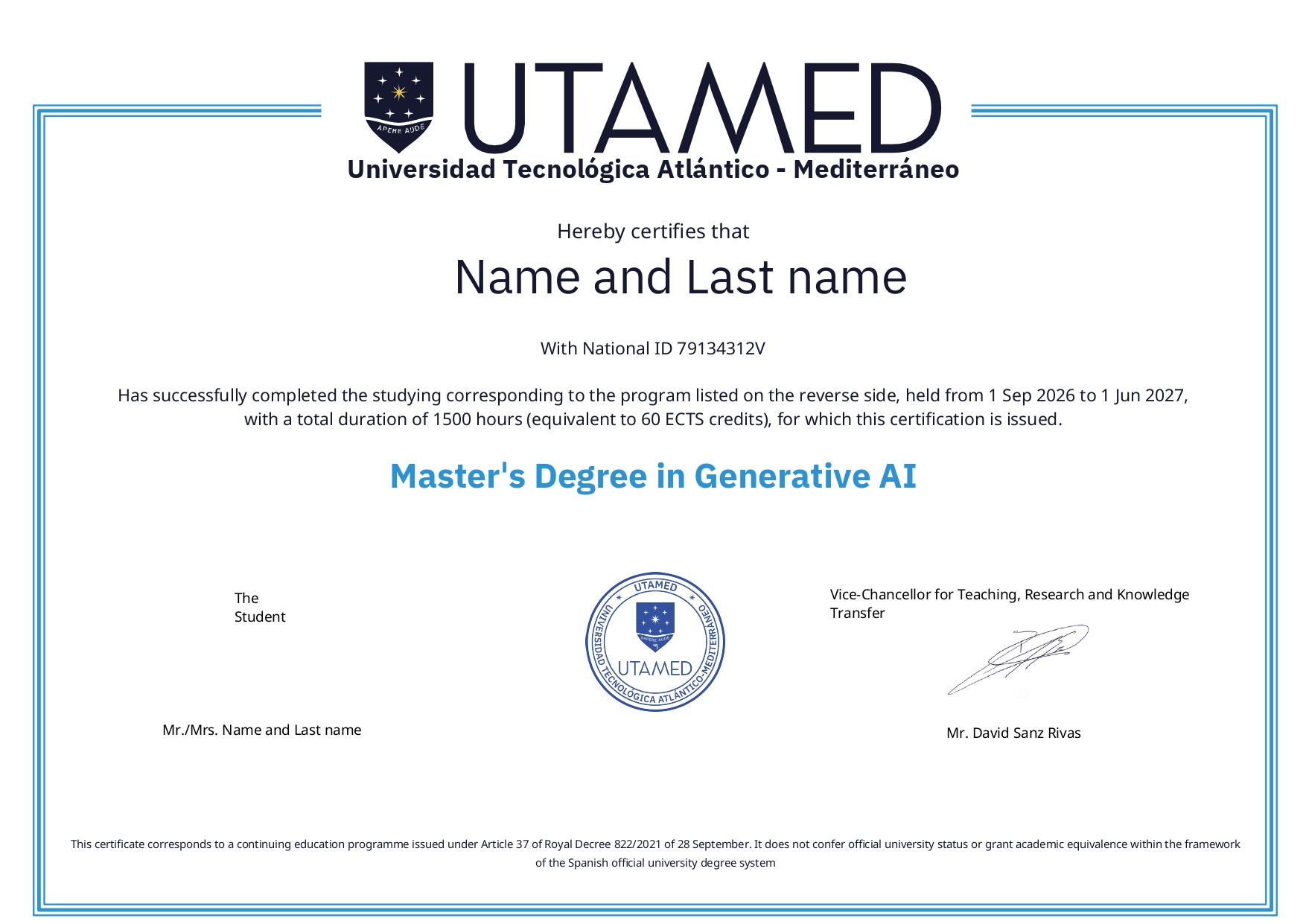
The Master’s in Generative AI is a one-year, 60 ECTS postgraduate programme designed to build advanced, application-focused and research-driven expertise in modern generative AI systems. The programme prepares learners to design, develop, deploy, and govern generative AI solutions, addressing real-world business and societal needs while ensuring ethical and responsible AI use.
Master the complete data science ecosystem with hands-on experience using industry-leading tools and frameworks. Our Advanced Program in Data Science equips you with practical skills in Python programming, data manipulation, visualization, and machine learning – preparing you for real-world data challenges.
Master the complete artificial intelligence ecosystem with hands-on experience using industry-leading tools and frameworks. Our Master of AI in Business program equips you with practical skills in Python programming, data analytics, machine learning, and business intelligence – preparing you for real-world AI challenges.
Universidad Tecnológica Atlántico Mediterráneo (UTAMED), Spain, is a forward-thinking institution based in Málaga, a growing European hub for technology and innovation. With a strong focus on applied learning and industry relevance, UTAMED delivers programmes that combine academic depth with practical skills, preparing graduates to thrive in evolving digital landscapes.
The Master’s Degree in Generative AI is a one-year postgraduate programme designed to build advanced expertise in developing and deploying intelligent generative systems. It covers key areas such as large language models, prompt engineering, transformer architectures, retrieval-augmented generation (RAG), and agentic AI. The programme integrates technical development with responsible AI practices, governance, and real-world applications through hands-on projects and research. Graduates are equipped to take on roles in AI engineering, product development, and innovation, contributing to scalable, ethical, and impactful AI solutions across industries.
Eligibility
Students seeking admission to this programme should hold a Bachelor’s degree from a recognised institution. The programme is suitable for graduates from diverse academic backgrounds, though a foundation in computing, artificial intelligence, data science, or related disciplines is considered advantageous. Applicants should demonstrate the ability to engage with technical, analytical, and research-oriented postgraduate study in generative AI and intelligent systems.
Prerequisites
While prior experience in generative AI is not mandatory, a basic understanding of programming concepts and computational thinking will be beneficial. Familiarity with fundamental concepts such as algorithms, logical reasoning, and working with datasets will support learning across areas like large language models, prompt engineering, and AI system design. Basic computer literacy and the ability to work with digital tools and development environments are essential for effectively engaging with the programme’s applied components.
This module provides a comprehensive understanding of the principles, architectures, and applications of Generative Artificial Intelligence. It explores how generative systems create text, images, code, and multimodal outputs using probabilistic and data-driven approaches. Students examine the evolution of generative models, including foundational techniques such as GANs, VAEs, and transformer-based systems, alongside the role of large-scale datasets and computational resources. The module also introduces key challenges such as bias, hallucination, and model limitations, while critically engaging with ethical considerations, governance frameworks, and regulatory developments such as the EU AI Act. Through conceptual exploration and introductory practical exercises, students develop a foundational understanding required for advanced study in generative AI
Learning Outcomes
By completing this module, you will:
LO1: Critically evaluate the principles and evolution of generative AI models and their applications.
LO2: Critically analyse different types of generative models and their underlying probabilistic foundations.
LO3: Assess the ethical, societal, and regulatory implications of generative AI systems.
LO4: Apply foundational tools to experiment with basic generative AI workflows.
Large Language Models
This module focuses on the theoretical foundations and practical implementation of Large Language Models (LLMs), which underpin modern generative AI systems. It examines model architectures, tokenization strategies, embeddings, and large-scale training processes, including pre-training and fine-tuning. Students critically explore model scaling, performance optimization, and evaluation techniques, while also addressing challenges such as bias, interpretability, and resource constraints. The module provides practical exposure to working with LLMs, including adapting models for domain-specific applications. It also situates LLMs within broader AI ecosystems, enabling students to understand their capabilities, limitations, and implications for real- world deployment.
Learning Outcomes
Module Duration: 4–6 weeks
By completing this module, you will:
LO1: Critically analyse the architecture and training processes of large language models.
LO2: Critically evaluate LLM performance using appropriate metrics and benchmarks.
LO3: Design workflows for fine-tuning and adapting LLMs to specific tasks.
LO4: Critically assess risks and limitations associated with LLM deployment.
Prompt Engineering and LangChain
This module develops advanced capabilities in designing, optimizing, and operationalizing prompts for generative AI systems. It explores prompt engineering techniques such as zero-shot, few-shot, and chain-of-thought prompting, alongside strategies for controlling model outputs and improving reliability. Students engage with orchestration frameworks such as LangChain to build structured, context-aware, and scalable AI workflows. The module emphasizes the integration of LLMs with external tools, APIs, and data sources, enabling the development of practical applications. Through hands-on exercises and project-based learning, students gain the ability to design robust prompt-driven systems and evaluate their effectiveness in diverse use cases.
Learning Outcomes
Module Duration: 4–6 weeks
By completing this module, you will:
LO1: Design and optimize prompts for diverse generative AI tasks.
LO2: Implement structured workflows using prompt chaining techniques.
LO3: Develop applications integrating LLMs using orchestration frameworks.
LO4: Critically evaluate the effectiveness and reliability of prompt-based systems.
Transformers and State-based Models
This module provides an in-depth exploration of transformer architectures and state- based models that form the backbone of contemporary generative AI systems. It examines sequence modelling techniques, including recurrent neural networks and their limitations, leading to the development of attention mechanisms and transformer-based architectures. Students analyse key components such as self-attention, multi-head attention, positional encoding, and encoder-decoder structures. The module also addresses computational efficiency, scalability, and training challenges associated with deep neural networks. Through theoretical analysis and practical implementation, students develop a deep understanding of how these models operate and how they can be applied across a range of domains.
Learning Outcomes
By completing this module, you will:
LO1: Critically analyse transformer architecture and attention mechanisms.
LO2: Demonstrate a critical understanding of comparison between transformers and state-based sequence models.
LO3: Implement core components of transformer-based models.
LO4: Critically evaluate performance trade-offs across different architectures.
Retrieval-Augmented Generation (RAG) Systems
This module focuses on Retrieval-Augmented Generation (RAG) systems, which enhance generative AI models by integrating external knowledge sources. It explores the architecture and design of systems that combine information retrieval with generative capabilities to improve accuracy, factual grounding, and contextual relevance. Students examine techniques such as embeddings, vector databases, semantic search, and indexing strategies, alongside methods for integrating structured and unstructured data. The module emphasizes system design, scalability, and evaluation of RAG pipelines in real- world scenarios. Practical exercises enable students to build and deploy RAG-based applications, bridging the gap between standalone generative models and knowledge- driven AI systems.
Learning Outcomes
By completing this module, you will:
LO1: Design retrieval-augmented generation systems for real-world applications.
LO2: Critically analyse the integration of retrieval and generation components.
LO3: Implement vector search and knowledge indexing techniques.
LO4: Critically evaluate performance improvements using RAG architectures.
Agentic AI
This module explores the emerging field of agentic AI, focusing on the design and development of autonomous systems capable of reasoning, planning, and executing complex tasks. It examines agent architectures, decision-making processes, tool integration, and multi-step workflows, enabling systems to interact dynamically with their environment. Students analyse concepts such as memory, context management, and multi-agent collaboration, alongside approaches to reinforcement learning and human- in-the-loop systems. The module also addresses challenges related to safety, reliability, and governance of autonomous AI systems. Through applied projects, students gain the ability to design and evaluate intelligent agents capable of solving real-world problems across diverse domains.
Learning Outcomes
By completing this module, you will:
LO1: Critically analyse architectures and components of agentic AI systems.
LO2: Design agents capable of reasoning, planning, and tool use.
LO3: Implement multi-step workflows using autonomous agents.
LO4: Critically evaluate risks, reliability, and governance of agentic systems.
Research Methods, Supervised Dissertation & Viva
The dissertation represents an independent piece of advanced research or applied project in Generative AI, supervised by academic staff. It culminates in a Viva Voce (oral defence) to assess depth of understanding and research competence. This module consolidates theoretical knowledge and practical expertise developed across the programme.
Learning Outcomes
Module Duration: 4–6 weeks
By completing this module, you will:
LO1: Conduct independent research addressing a Gen AI problem.
LO2: Apply appropriate methodologies and analytical techniques.
LO3: Critically analyse and synthesise research findings.
LO4: Communicate research outcomes clearly in written and oral form.
Your Success Story Starts Here
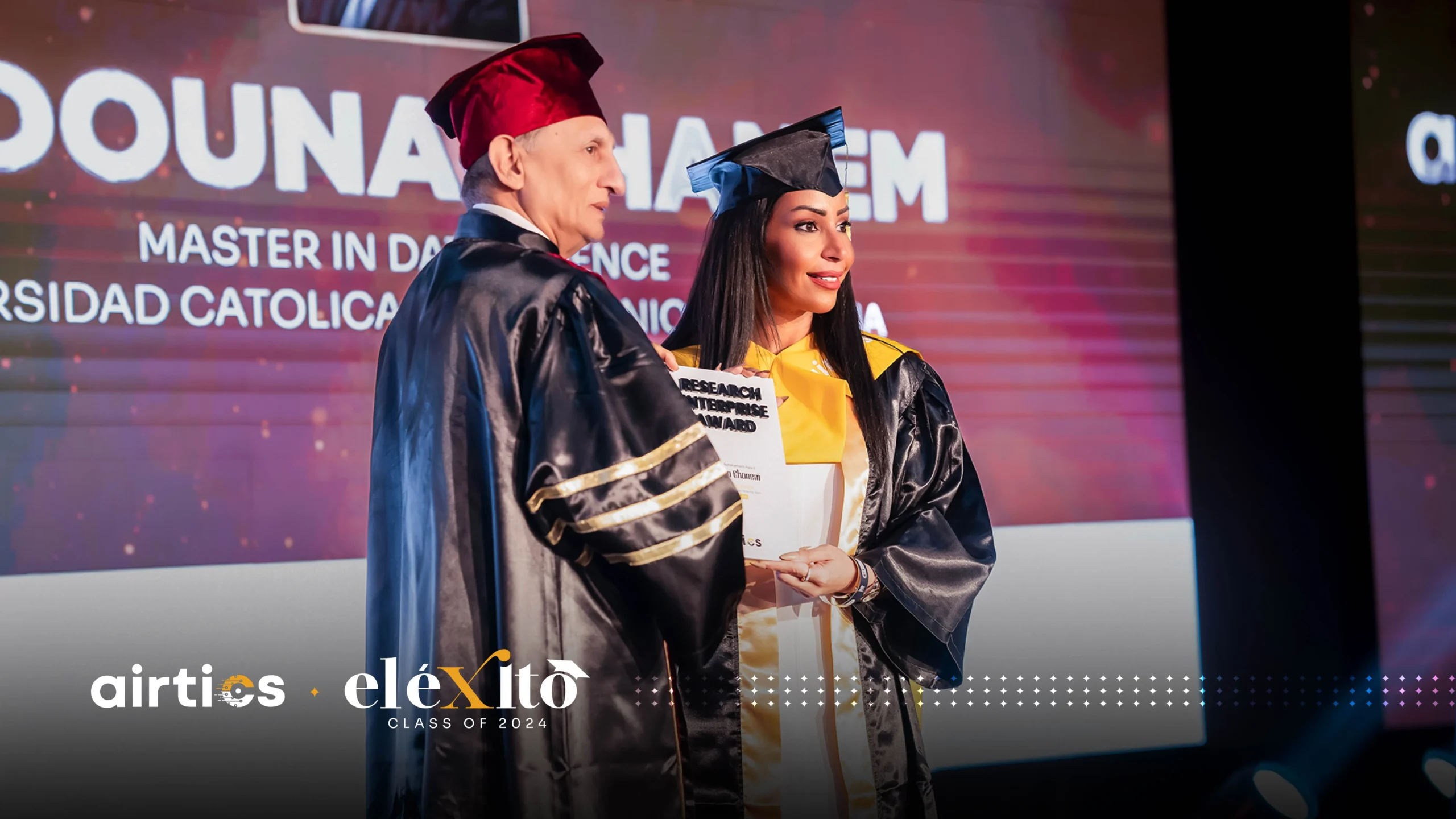
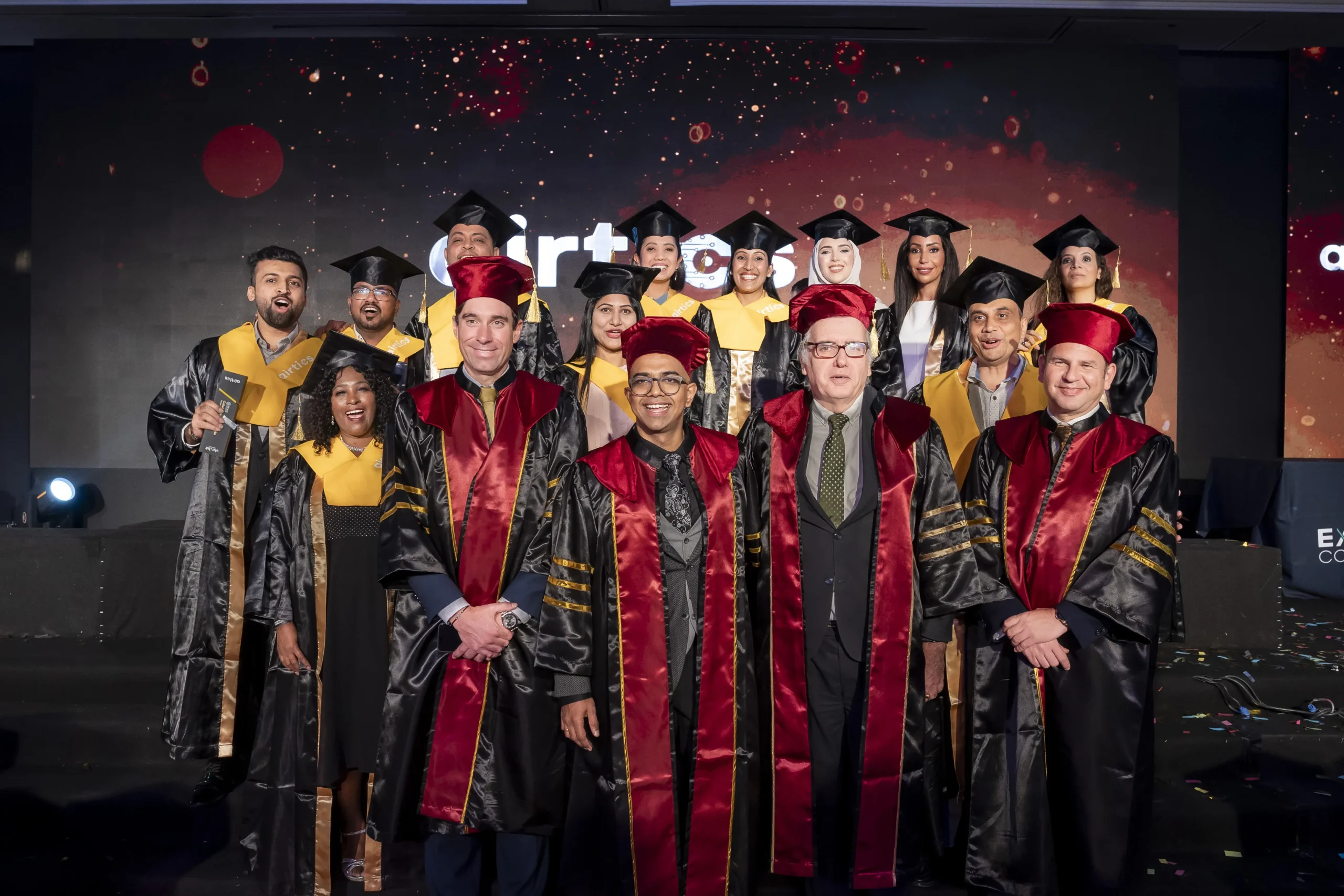
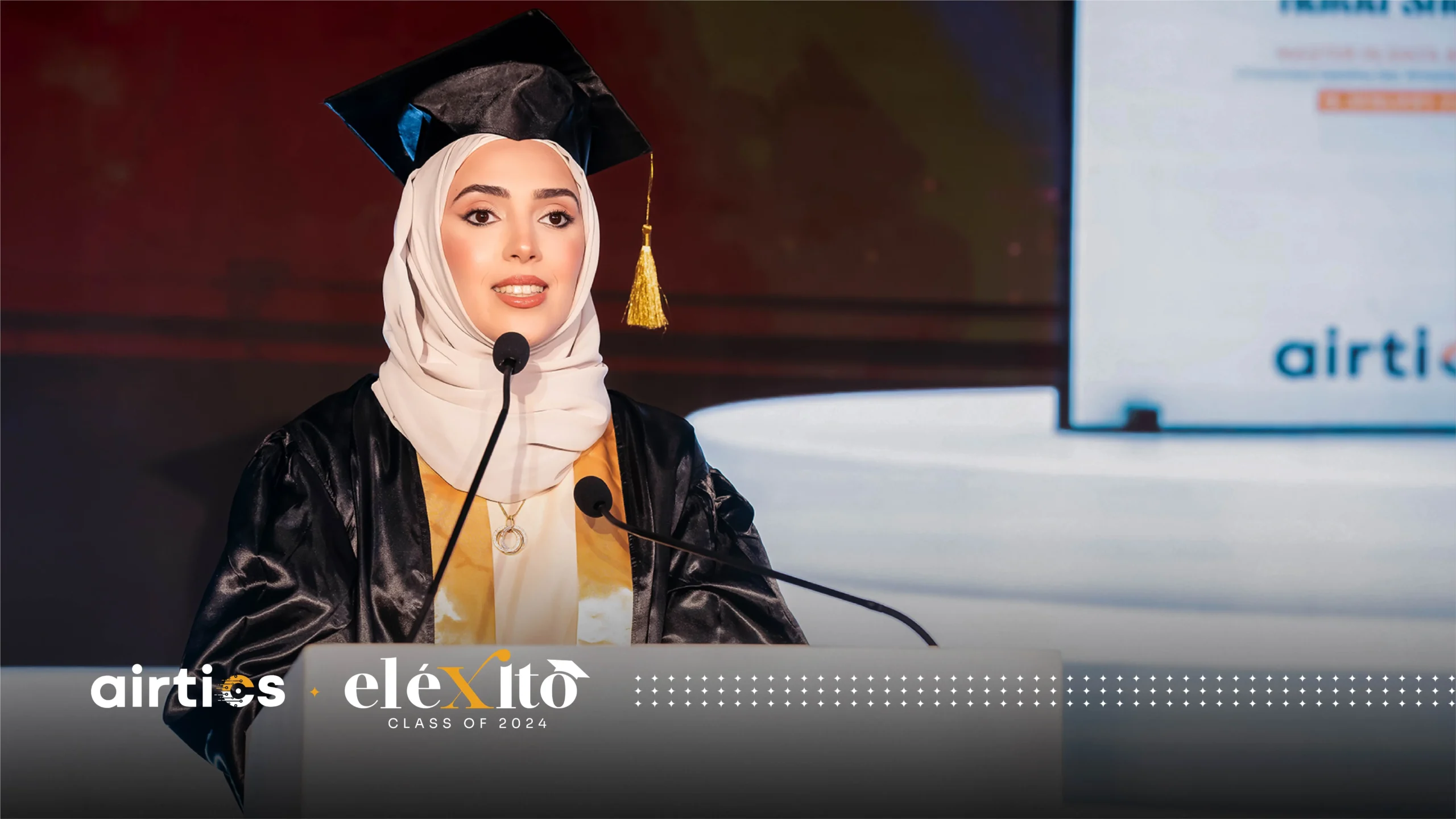
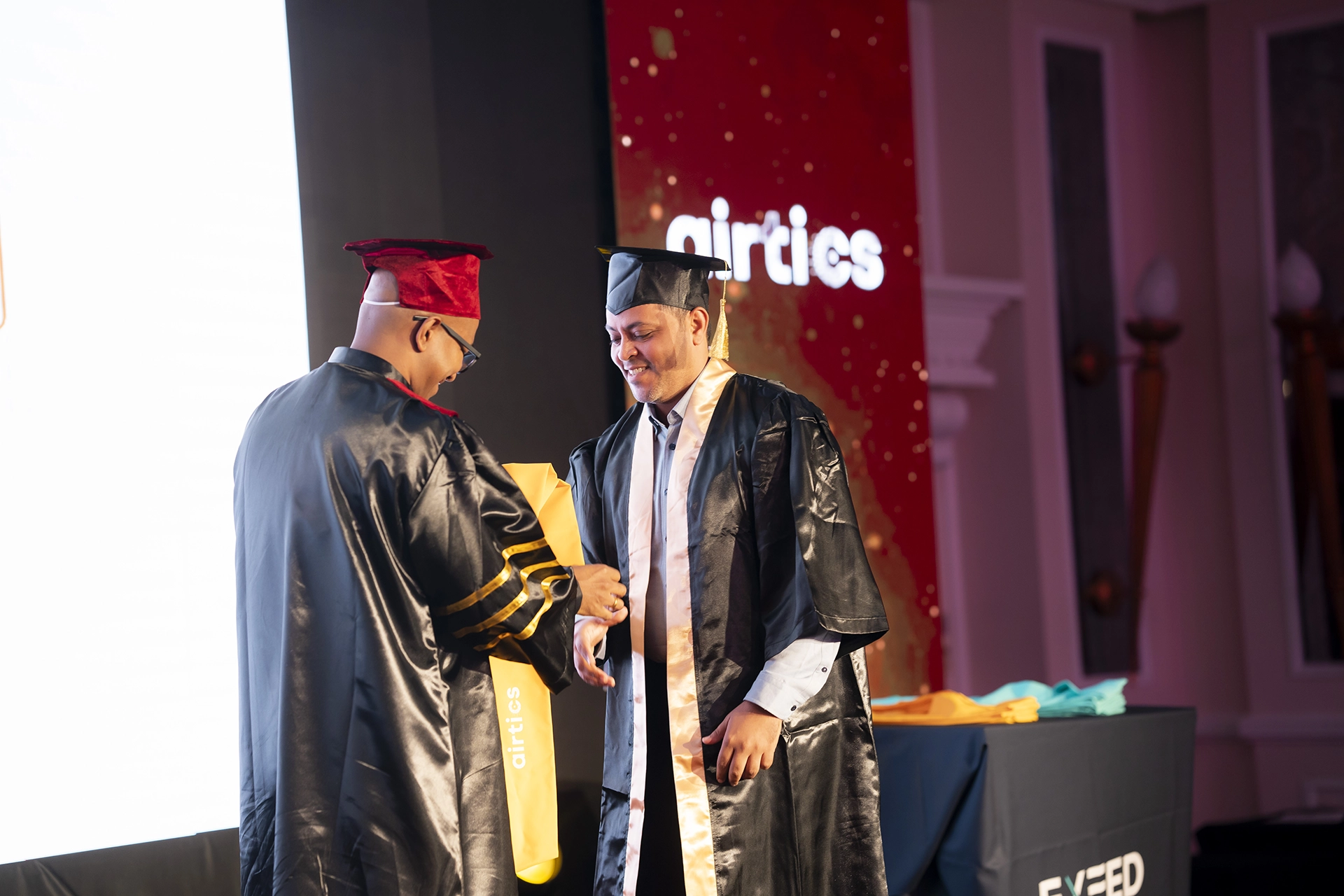
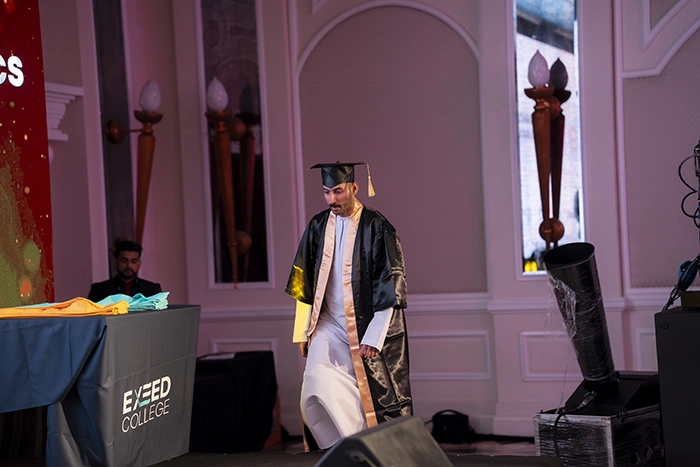
Every image here tells a story of transformation, dedication, and success. Be the next to wear the cap and gown. Enroll today, and let your journey begin.
Every student has a story—of ambition, of challenge, of growth. In their own words, they share how Airtics became a turning point in their learning journey and helped them move closer to their goals.
Pemsith Ravi
Thanks to the support of this prestigious institution – airtics. I was able to earn a master’s degree in data science. I had a fantastic educational experience there, and they possess a highly competent and knowledgeable lecturing panel. Anyone looking to make it major in the data science field should enrol in their course.
Verified Review
Zeeshan Ali
Airtics offers a truly transformative learning experience. The course content is up-to-date, the mentors are incredibly supportive, and the flexibility of the online platform made it easy to balance with my work. Highly recommended for anyone looking to upskill!
Verified Review
Aalaa Shbair
The experience at Airtics College has been tremendous for me. It has illuminated my path and opened the way for me to become a developer of solutions in my workplace. I cherish every moment of this online learning experience and the supportive community of instructors and peers.
Verified Review
Muhammad Fatouh
Airtics offered a great platform that allowed me to take a meaningful step forward in data science while balancing my demanding job as a telecom engineer. If you have a busy schedule and struggle with work-life balance, I encourage you to find a flexible platform like Airtics to pursue your goals.
Verified Review
Al Tayyab Bakhsh
Coming from a non-technical background in marketing, switching to data science was challenging. The faculty at Airtics was incredibly helpful, especially my mentor Miss Piyali, who guided me with patience every step of the way. Their mentorship gave me the confidence to succeed.
Verified Review
Dilnawaz Qureshi
Airtics provides an impressive curriculum for Python Full Stack development that is both well-structured and up-to-date. This comprehensive approach ensures we acquire a thorough understanding of the field and are well-prepared for real-world challenges.
Verified Review
Charuhaas Shenoy
Airtics offers a truly transformative learning experience. The course content is up-to-date, the mentors are incredibly supportive, and the flexibility of the online platform made it easy to balance with my work. Highly recommended for anyone looking to upskill!
Verified Review
Madonna Ghanem
The resources provided by Airtics for AI and ML students are top-notch. The institute has a well-equipped virtual lab with the latest software, allowing us to experiment with complex algorithms. The online library offers a wide range of reference materials and research papers.
Verified Review
Dhruv Narse
Airtics provides a conducive learning environment for data analytics students. They have experienced faculty, and provide access to the latest software and tools used in the industry. This ensures that we are well-prepared for our future careers in the field.
Verified Review
What Our Students Say
Every student has a story—of ambition, of challenge, of growth. In their own words, they share how Airtics became a turning point in their learning journey and helped them move closer to their goals.
Pemsith Ravi
Thanks to the support of this prestigious institution – airtics. I was able to earn a master’s degree in data science. I had a fantastic educational experience there, and they possess a highly competent and knowledgeable lecturing panel. Anyone looking to make it major in the data science field should enrol in their course.
Verified Review
Zeeshan Ali
Airtics offers a truly transformative learning experience. The course content is up-to-date, the mentors are incredibly supportive, and the flexibility of the online platform made it easy to balance with my work. Highly recommended for anyone looking to upskill!
Verified Review
Aalaa Shbair
The experience at Airtics College has been tremendous for me. It has illuminated my path and opened the way for me to become a developer of solutions in my workplace. I cherish every moment of this online learning experience and the supportive community of instructors and peers.
Verified Review
Muhammad Fatouh
Airtics offered a great platform that allowed me to take a meaningful step forward in data science while balancing my demanding job as a telecom engineer. If you have a busy schedule and struggle with work-life balance, I encourage you to find a flexible platform like Airtics to pursue your goals.
Verified Review
Al Tayyab Bakhsh
Coming from a non-technical background in marketing, switching to data science was challenging. The faculty at Airtics was incredibly helpful, especially my mentor Miss Piyali, who guided me with patience every step of the way. Their mentorship gave me the confidence to succeed.
Verified Review
Dilnawaz Qureshi
Airtics provides an impressive curriculum for Python Full Stack development that is both well-structured and up-to-date. This comprehensive approach ensures we acquire a thorough understanding of the field and are well-prepared for real-world challenges.
Verified Review
Charuhaas Shenoy
Airtics offers a truly transformative learning experience. The course content is up-to-date, the mentors are incredibly supportive, and the flexibility of the online platform made it easy to balance with my work. Highly recommended for anyone looking to upskill!
Verified Review
Madonna Ghanem
The resources provided by Airtics for AI and ML students are top-notch. The institute has a well-equipped virtual lab with the latest software, allowing us to experiment with complex algorithms. The online library offers a wide range of reference materials and research papers.
Verified Review
Dhruv Narse
Airtics provides a conducive learning environment for data analytics students. They have experienced faculty, and provide access to the latest software and tools used in the industry. This ensures that we are well-prepared for our future careers in the field.
Verified Review
Learn from Industry Leaders & Experts
Learn from the best in the field. Our faculty combines academic brilliance with industry expertise, featuring PhD holders, senior data scientists, and AI researchers from top organizations.
Ms. Piyali Mondal
Head of Department
Ms. Priti Mondal
Associate Faculty
Dr. Abdullah El-Nokiti
Professor
Dr. Mohd Merajuddin Inamdar
Professor
Dr. Madhavi Vaidya
Professor
Dr. Poonam Chaudhari
Professor
Dr. Anup Kumar Maurya
Professor
Dr. Milan Amrutkumar Joshi
Industry Expert
Dr. Mohamed Elhaw
Industry Expert
Dr. Pradeep Tiwari
Industry Expert
Global Student Community
Students from 60+ Countries Worldwide
Frequently Asked Questions
Find answers to common questions about our Master of Artificial Intelligence in Business program. Learn about program details, requirements, and what to expect from this 12-month UCAM-certified degree program.
Why should I join the AI in Business program?
AI is transforming every industry from healthcare to finance, retail to manufacturing. This program equips you with the strategic knowledge to lead AI implementation in business contexts. You’ll gain practical skills in data analytics, machine learning, and business intelligence while earning a respected European university degree.
What if I fail to attend the classes?
All live sessions are recorded and available through our Learning Management System (LMS). You can access missed classes anytime and review course materials at your convenience. Our flexible learning format accommodates working professionals with busy schedules, ensuring you never fall behind.
How does AI in Business differ from traditional MBA programs?
This program specifically focuses on artificial intelligence applications in business strategy, operations, and decision-making. Unlike traditional MBAs, you’ll learn hands-on AI tools like Python, machine learning algorithms, and data visualization platforms while developing strategic business acumen for the AI-driven economy.
What can I expect from the AI in Business program?
You’ll complete 7 comprehensive modules covering data science, machine learning, operations management with AI, and international HR management with AI. The program includes 200 hours of live training, 6 assignments, 3 industry-based projects, and a capstone project with real business applications.
Who can join the program?
This program is designed for business professionals, managers, consultants, and anyone seeking to advance their career in AI-driven business environments. You need a bachelor’s degree and English proficiency. The course accommodates beginners, providing foundational knowledge before advancing to complex topics.
Do I need prior experience in AI or coding to learn the program?
No prior AI or coding experience is required. The program starts with Python fundamentals and gradually builds your technical skills. We provide comprehensive foundational training in mathematics, programming, and AI concepts before advancing to business applications and strategic implementations.
What are the current capabilities of Artificial Intelligence in business?
AI currently powers predictive analytics, customer lifetime value modeling, supply chain optimization, automated decision-making, personalized marketing, fraud detection, and operational efficiency improvements. The program covers real-world applications across healthcare, finance, retail, and manufacturing industries.
What career opportunities are available after completion?
Graduates pursue roles as AI Business Analysts, Data Science Managers, AI Strategy Consultants, Business Intelligence Directors, Digital Transformation Leaders, and AI Project Managers. Our 94% placement success rate demonstrates strong industry demand for AI-skilled business professionals.
Is the degree internationally recognized?
Yes, the Master’s degree is awarded by Universidad Católica de Murcia (UCAM), a fully-accredited European university. UCAM is accredited by ANECA (National Agency for Quality Assessment and Accreditation of Spain) and recognized by the Ministry of Education, ensuring global recognition.
What support is provided during the program?
You’ll receive 24/7 LMS access, dedicated student mentors, live instructor support, and guidance from industry professionals. Our faculty includes experienced academics and practitioners who provide personalized feedback on assignments and projects throughout your learning journey.
Can I complete this program while working full-time?
Absolutely. The program is designed for working professionals with flexible scheduling, recorded sessions, and online learning format. You can access materials anytime, participate in live sessions according to your schedule, and complete assignments at your own pace while maintaining work commitments.
What is the difference between the capstone project and assignments?
Assignments are module-specific exercises that reinforce learning concepts. The capstone project is a comprehensive, industry-based challenge where you collaborate with business mentors to solve real-world problems, applying all program knowledge to create a portfolio-worthy solution that demonstrates your expertise to employers.
Still have questions?
If you have any other questions or need further information about our Master of Artificial Intelligence in Business program, don’t hesitate to contact us. Our admissions team is here to help you take the next step in your AI career journey.